Authors: Brian Hudelson, UW-Madison Plant Pathology
Last Revised: Jan. 8, 2026
D-number: D0137
Root and Crown Rots Hosts: Any plant Pathogens:Assorted root rot fungi/water molds Signs/Symptoms: Poor growth, branch dieback, discolored and deteriorated roots For more information see:UW Plant Disease Facts D0094
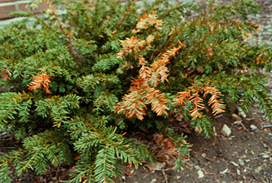
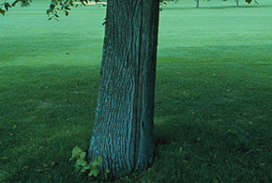
Planting-Related Issues/Decline Hosts:Woody trees and shrubs Pathogens:None (abiotic) Signs/Symptoms:No visible root flare, girdling roots, frost cracks, canopy thinning, early fall color, branch dieback, tree/shrub decline and death
Scab (Apple and Pear) Hosts:Apple, crabapple, pear, mountain-ash Pathogens:Venturia inaequalis, Venturia pirina Signs/Symptoms:Feathery-edged spots on leaves and fruits often leading to leaf loss and tree defoliation For more information see:UW Plant Disease Facts D0004
Septoria Leaf Spot of Lilac Host:Lilac Pathogen:Septoria sp. Signs/Symptoms:Dead spots on leaves, potentially leading to complete leaf browning
Gymnosporangium Rusts Hosts:Juniper, apple, crabapple, hawthorn, quince Pathogen:Gymnosporangium spp. Signs/Symptoms:Brown blobs with orange gelatinous masses (juniper); yellow/orange leaf spots (other hosts) For more information see:UW Plant Disease Facts D0058/0131
Chlorosis Hosts:Pin oak, red maple, birch, azalea, white pine, blueberry Pathogen: None (Abiotic) Signs/Symptoms: Yellow leaves with dark green veins For more information see: UW Plant Disease Facts D0030
Septoria Leaf Spot and Early Blight Host:Tomato Pathogens:Septoria lycopersici and Alternaria solani Signs/Symptoms:Spotting and eventual total death of leaves working from the bottom of the plant up For more information see:UW Plant Disease Facts D0100/46
Powdery Mildew Hosts:Herbaceous and deciduous woody ornamentals, fruits, vegetables, turf Pathogens:Miscellaneous powdery mildew fungi Signs/Symptoms:Powdery white growth on leaves For more information see:UW Plant Disease Facts D0084/86/87
Rhizosphaera Needle Cast Hosts:Colorado blue spruce, other spruces Pathogen:Rhizosphaera kalkhoffii Signs/Symptoms:Browning/purpling of interior needles of lower branches, followed by needle drop For more information see:UW Plant Disease Facts D0093
Diplodia Shoot Blight and Canker Hosts:Austrian pine, other pines Pathogen:Diplodia spp. Signs/Symptoms:Dieback of brand tips with dead needles showing uneven lengths For more information see:UW Plant Disease Facts D0042
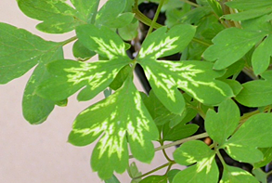
Tobacco Rattle Hosts:Many herbaceous ornamentals and vegetables Pathogens:Tobacco rattle virus Signs/Symptoms:Blotchy leaf color; yellow lines, ring spots, or dead spots on leaves; distorted leaf growth For more information see:UW Garden Facts D0116
For more information on plant problems to watch for in 2025: Contact the University of Wisconsin Plant Disease Diagnostics Clinic (PDDC) at (608) 262-2863 or pddc@wisc.edu. This Fact Sheet is also available in PDF format:
An EEO/Affirmative Action employer, University of Wisconsin-Madison Division of Extension provides equal opportunities in employment and programming, including Title IX and ADA requirements. This document can be provided in an alternative format by calling Brian Hudelson at (608) 262-2863 (711 for Wisconsin Relay).
Thanks to Julie Hill, Denise Rocha and Janell Wehr for reviewing this document.
Thanks also to Marissa Wilmot (Septoria leaf spot of lilac), and Anette Phibbs (tobacco rattle) for use of their photos.
A complete inventory of UW Plant Disease Facts is available at the University of Wisconsin-Madison Plant Disease Diagnostics Clinic website: https://pddc.wisc.edu.